
1. Identification of correlations
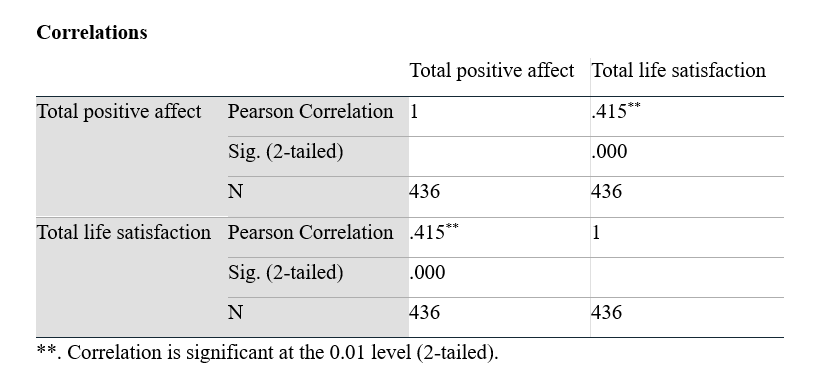
Based on the correlation matrix, there is only one correlation reported:
- A moderate correlation between total positive affect and ...
1. Identification of correlations
Based on the correlation matrix, there is only one correlation reported:
- A moderate correlation between total positive affect and total life satisfaction (r = .415).
There are no strong (r ≥ .50) or weak (r = .10–.29) correlations available in this matrix.
2. Interpretation in plain language
- Moderate correlation:
There is a moderate positive correlation between positive affect and life satisfaction.
“In simple terms, people who experience more positive emotions tend to feel more satisfied with their lives.” - Strong correlation: Not available in this dataset.
- Weak correlation: Not available in this dataset.
3. Comments on surprising or non-significant results
The correlation between positive affect and life satisfaction is statistically significant (p = .000), meaning the result is unlikely due to chance.
There are no non-significant relationships in the matrix. Additionally, the result is not surprising, as it is consistent with existing research suggesting that positive emotions are associated with higher life satisfaction.