
Lately I’ve been spending a lot of time reviewing my own singing and songwriting habits, and I came across a realization that’s honestly changed how I approach music ...
Lately I’ve been spending a lot of time reviewing my own singing and songwriting habits, and I came across a realization that’s honestly changed how I approach music entirely.
For the longest time, whenever I struggled with certain songs — straining on high notes, running out of breath, or sounding unstable — I’d automatically think my vocal technique was bad or that I just wasn’t “talented enough.”
But the truth is far simpler: most of the time, we’re just singing outside our natural vocal range without even realizing it.
As someone who writes and covers songs regularly, I’ve grown used to pushing my voice to its edge. There are tracks I can barely pull off when I’m at my best, yet I still try to sing them in their original key because I love how they sound. It took me a while to understand how counterproductive this is.
A high note you can “scrape through” isn’t a note you can perform. It’s tense, inconsistent, and heavily relies on your daily vocal condition. One tired day, and it cracks instantly.
This is why I’ve started checking my vocal range seriously instead of guessing by ear. I’ve been using a casual online vocal range tool just to map out my own comfortable zone, and it’s honestly eye-opening.
It doesn’t just show my highest and lowest notes — it helps me tell which parts of my voice are free, relaxed, and musical, and which parts are basically my vocal limit. Now when I write songs or plan covers, I adjust the key accordingly. The difference in tone stability is night and day.
If you’re a fellow music hobbyist, I truly recommend doing this for yourself. You’ll realize so many songs you’ve been struggling with are simply not written for your voice type. Transposing down isn’t cheating — it’s how you make your singing sound clean, confident, and natural.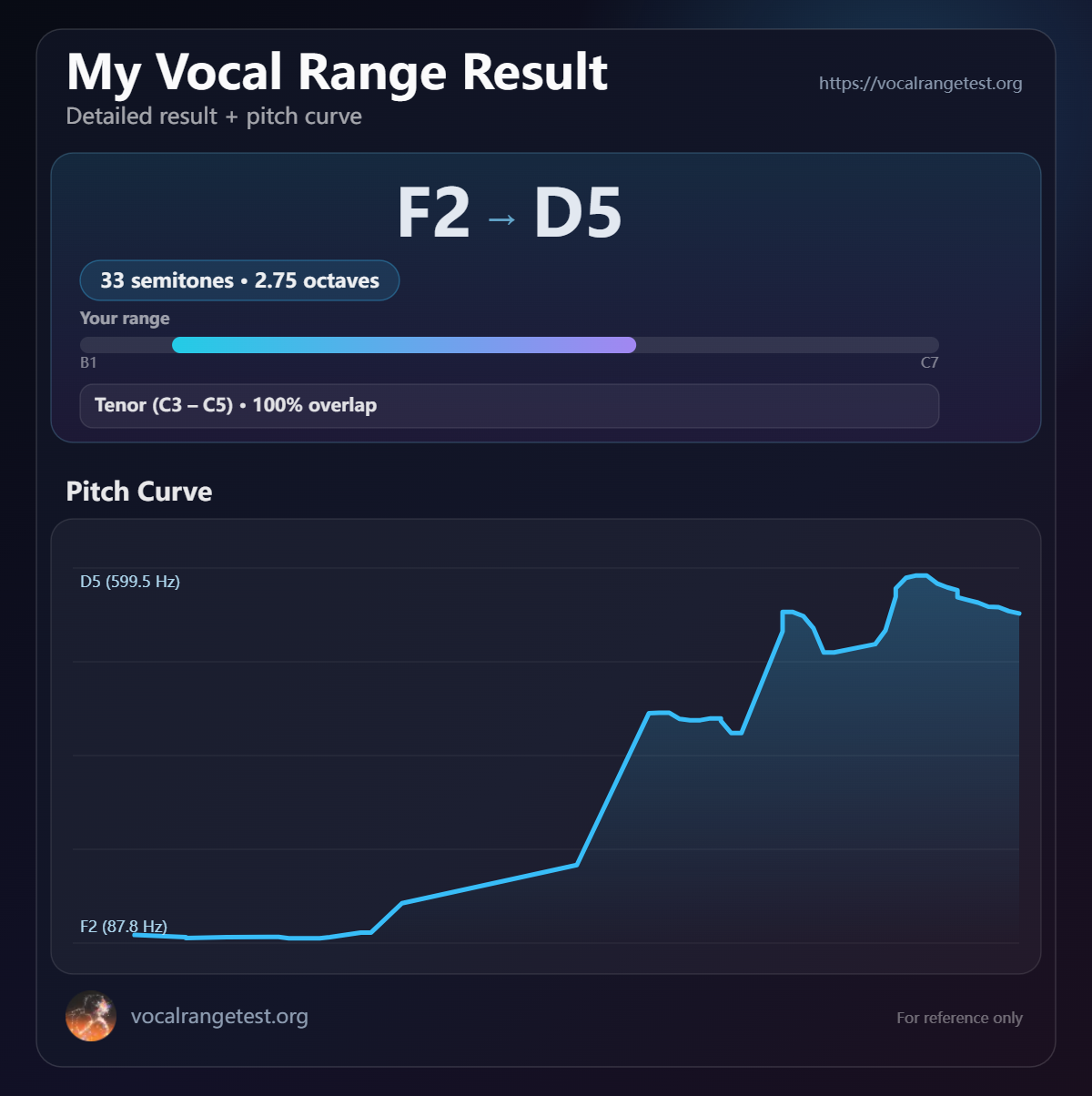
One small thing I really liked about this site: aside from the vocal range test, it also has a Perfect Pitch Test for ear training.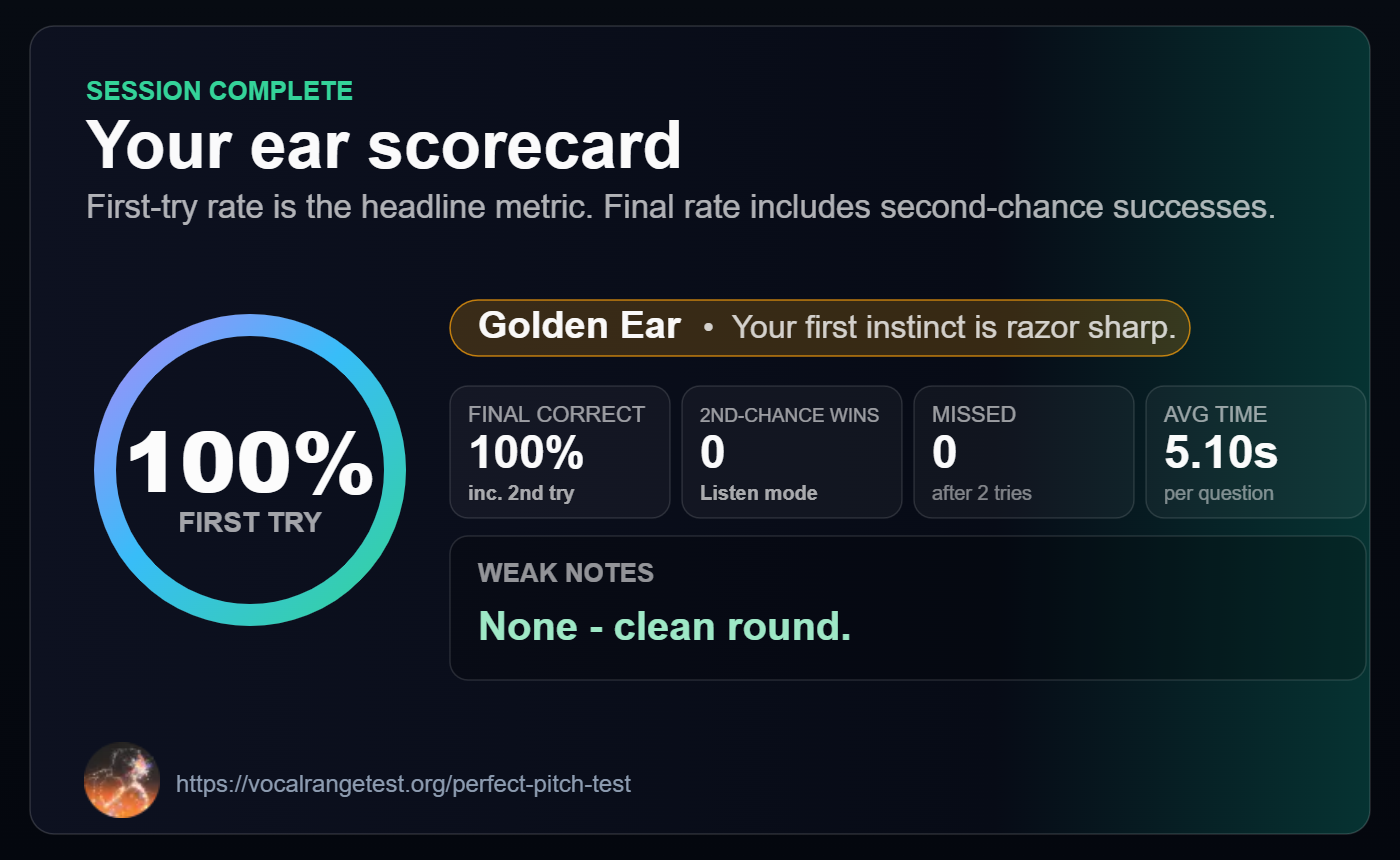
I’ve been using it casually in my free time to practice pitch recognition. It’s super beginner-friendly, great for refining your musical ear, and helps a lot with songwriting, improvisation, and accurate singing. It’s a nice little bonus practice tool to slowly build up your musicianship without heavy software.
At the end of the day, I think music is about working with your voice, not against it.
Knowing your limits, practicing smart, and training your ear consistently will always beat mindlessly pushing for harder notes.
If you love singing, start with knowing your own voice. It makes every note feel easier ❤️