Case Studies of EMI Implementation in Vietnam and ASEAN
Exploring institutional models, policies, and pedagogical experiences across Southeast Asia
1. Vietnam: National Policy and Institutional Practice
The implementation of English as a Medium of Instruction (EMI) in Vietnam’s higher education has been marked by significant challenges. While globalization and neoliberal policies have spurred interest in EMI, research indicates a troubling disconnect between national policy and actual classroom practices, often resulting in ineffective educational outcomes (Anh, 2022). EMI policies are frequently criticized for their top-down nature, failing to adequately consider the specific needs and contexts of Vietnamese institutions and students (Şahan et al., 2022). Studies reveal that despite positive attitudes among students and lecturers towards EMI, these sentiments do not always translate into successful instructional practices (Tri, 2021; Şahan et al., 2022). Additionally, the rigid 'English-only' focus in many programs poses challenges that can alienate non-native speakers, thereby undermining the objectives of these policies (Şahan et al., 2022). Therefore, a nuanced approach that takes into account local educational contexts and the diverse needs of learners is essential for the effective implementation of EMI in Vietnam.
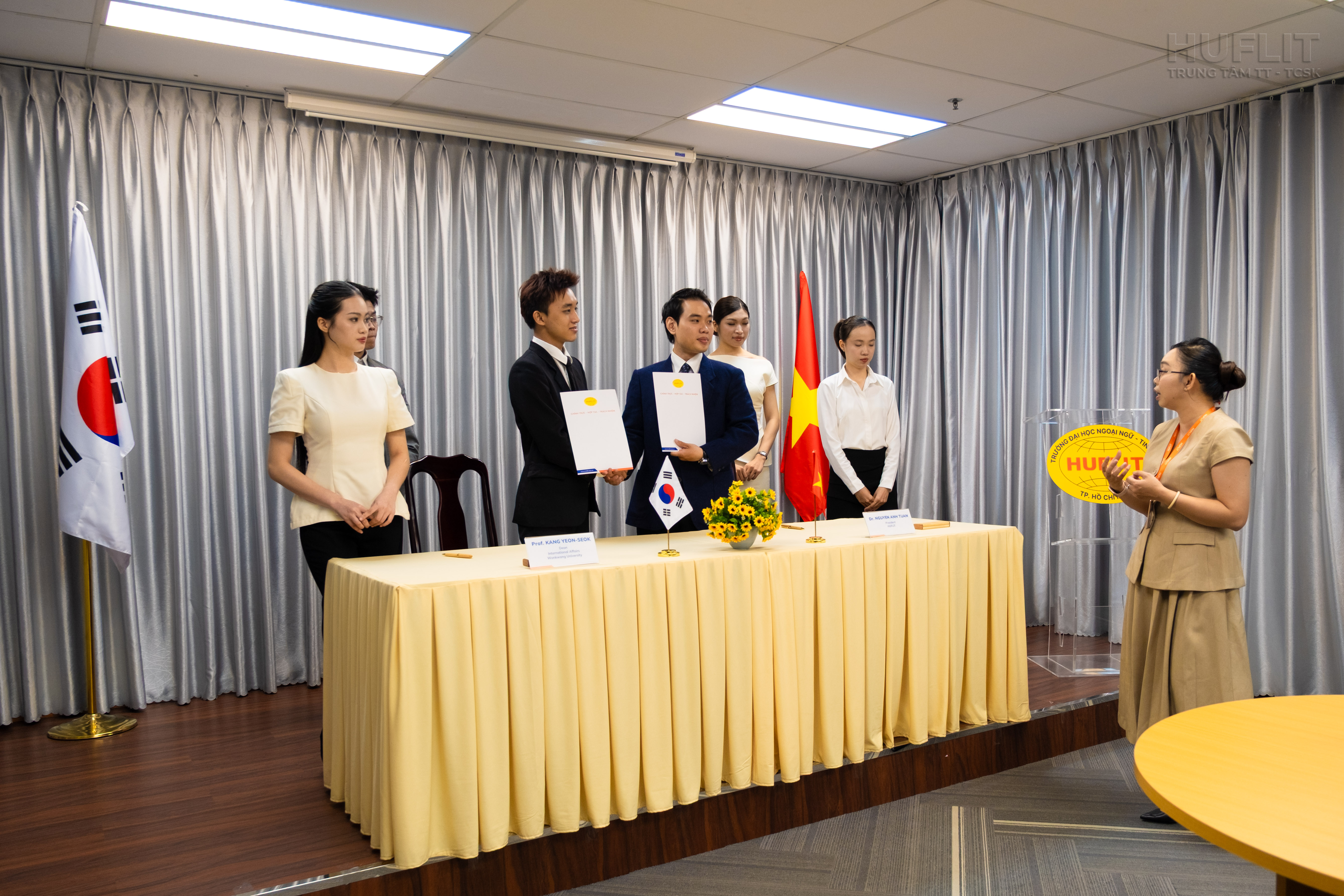
Vietnamese universities are expanding EMI programs to attract international students.
“Vietnam’s EMI journey reflects a broader trend across ASEAN: balancing English-medium goals with
local linguistic and cultural realities.” – British Council (2022)
2. Thailand: EMI as a Pathway to Internationalization
Thailand’s higher education sector has also embraced EMI as a means to attract foreign students and
enhance global visibility. Mahidol University and Chulalongkorn University
have led in developing dual-degree and exchange programs in English. According to the Thai Ministry of
Higher Education (2022), more than 800 EMI courses are now available nationwide.
Insight: Thai universities tend to integrate EMI in postgraduate programs first,
where faculty have stronger English proficiency and international collaborations.
The adoption of English as a Medium of Instruction (EMI) in Thailand is a complex initiative aimed at internationalizing the higher education system. This strategy seeks to improve English proficiency among graduates, which is in line with neo-liberal economic aspirations and the goal of enhancing students' competencies for global integration (Şahan et al., 2022; Macaro et al., 2021). Research indicates that the implementation of EMI is often driven by top-down governmental policies, which may overlook the specific needs of local institutions and students (Macaro et al., 2021). Despite the strong advocacy for EMI, challenges remain, including student attitudes towards language proficiency and the availability of resources necessary for effective English instruction Wilang & Nupong, 2022). Studies suggest that while there is a general acceptance of EMI among students, successful implementation hinges on addressing resource limitations and developing effective pedagogical strategies tailored to improve learning outcomes (Prabjandee & Nilpirom, 2022; Wilang & Nupong, 2022). Thus, successful EMI deployment in Thailand requires a comprehensive strategy that takes into account cultural contexts and adequately prepares educators to meet the challenges posed by this educational shift.
3. Malaysia: Longstanding Bilingual Policy and Lessons Learned
In Malaysia, the longstanding bilingual policy has facilitated the adoption of English as a Medium of Instruction (EMI) in higher education, reflecting the country’s commitment to balancing its national identity with global competitiveness. Research indicates that despite the absence of a definitive national language policy governing the use of English, there is a consensus among stakeholders regarding the adoption of EMI, particularly concerning the internationalization of higher education (Rahman & Singh, 2022). This dual-language approach promotes English while simultaneously recognizing the importance of Bahasa Malaysia in maintaining cultural heritage (Hsieh et al., 2025).
A study examining students' attitudes toward EMI revealed that although learning anxiety exists, many students perceive EMI as beneficial to their academic and professional prospects (Ghani, 2018). Additionally, faculty readiness for EMI varies significantly, highlighting the need for targeted training and resources to enhance teaching effectiveness in English (Lo & Othman, 2023). Overall, Malaysia's experience with EMI underscores valuable lessons about the complex interplay between language policy, educational practice, and cultural identity.
4. Philippines and Singapore: Mature EMI Ecosystems
The ecosystems of English as a Medium of Instruction (EMI) in the Philippines and Singapore have matured, reflecting their commitment to fostering global competencies in their higher education systems. The Philippines has adopted EMI in response to globalization, which has resulted in increased international visibility and competitiveness within the academic landscape (Munyaradzi & Manyike, 2022). Similar trends are apparent in Singapore, where EMI practices are deeply integrated into the educational framework, enhancing English proficiency and equipping students for international opportunities (Munyaradzi & Manyike, 2022).
Research indicates that both countries face challenges, such as the need for ongoing language support and effective pedagogical practices to optimize language acquisition within EMI contexts. In the Philippines, while EMI is widely accepted, educators report issues related to language proficiency and teaching resources, necessitating a focus on effective pedagogical strategies (Saragih, 2024). In Singapore, despite the sophisticated EMI ecosystem, studies show that prioritizing communicative efficiency often results in code-switching, complicating English learning processes (Şahan, 2020). Ultimately, the experiences of these two countries underscore the importance of tailored approaches in implementing EMI, ensuring robust support systems for educators and students alike.
Singapore’s EMI model demonstrates how clear policy alignment can ensure quality education.
5. Regional Reflections and Emerging Trends
Across ASEAN, EMI implementation reflects a dynamic interplay between globalization, national identity,
and pedagogical innovation. Regional cooperation through ASEAN University Network (AUN) initiatives
fosters mobility programs, cross-border accreditation, and English-based research projects.
Vietnam and Thailand are expanding EMI primarily for international visibility.
Malaysia demonstrates the benefits of sustained bilingual policy support.
Singapore and the Philippines illustrate mature models with global credibility.
However, the region continues to grapple with teacher proficiency, student preparedness, and
equitable access. Experts call for localized EMI models that respect linguistic
diversity while maintaining academic excellence.
“ASEAN’s strength lies in its diversity — EMI success depends not on uniformity,
but on adaptability.” – ASEAN Language Policy Forum (2023)
Reflection Prompt
Which ASEAN country’s EMI model do you find most effective, and why? Consider how cultural, linguistic, and institutional factors shape its success.
References
Anh, T. (2022). Examining English as a medium of instruction in Vietnam.
Crossings: A Journal of English Studies, 13(2), 114–130.
https://doi.org/10.59817/cjes.v13i2.453
Ghani, N. (2018). Attitudes towards English medium instruction courses among second language learners in relation to learning anxiety and learning achievement.
SALTEL Journal, 1(1), 38–47.
https://doi.org/10.35307/saltel.v1i1.6
Hsieh, C., Khau, A., & Shen, J. (2025). Bibliometric review of bilingual education between 1983 and 2023 (40 years).
SAGE Open, 15(3).
https://doi.org/10.1177/21582440251357553
Macaro, E., Şahan, K., & Rose, H. (2021). The profiles of English medium instruction teachers in higher education.
International Journal of Applied Linguistics, 31(3), 458–474.
https://doi.org/10.1111/ijal.12344
Munyaradzi, J., & Manyike, T. (2022). Perceptions of lecturers on English as a primary medium of instruction at a selected university in South Africa.
Journal for Language Teaching, 56(1).
https://doi.org/10.56285/jltvol56iss1a5414
Prabjandee, D., & Nilpirom, P. (2022). Pedagogy in English-medium instruction (EMI): Some recommendations for EMI teachers.
rEFLections, 29(2), 421–434.
https://doi.org/10.61508/refl.v29i2.260690
Rahman, M., & Singh, M. (2022). The ideology towards English as a medium of instruction (EMI) adoption in higher education in Malaysia: A case study.
3L: The Southeast Asian Journal of English Language Studies, 28(2), 109–121.
https://doi.org/10.17576/3l-2022-2802-08
Saragih, E. (2024). EFL lecturers’ practice, perception, and evaluation of English as the medium of instruction in tertiary education.
Issues in Language Studies, 13(1), 93–111.
https://doi.org/10.33736/ils.5789.2024
Tri, D. (2021). Ideologies of English‐medium instruction in Vietnam.
World Englishes, 42(4), 732–748.
https://doi.org/10.1111/weng.12575
Wilang, J., & Nupong, S. (2022). Factors affecting EMI attitudes of engineering and nursing students.
Theory and Practice in Language Studies, 12(3), 437–446.
https://doi.org/10.17507/tpls.1203.03
Şahan, K. (2020). ELF interactions in English-medium engineering classrooms.
ELT Journal, 74(4), 418–427.
https://doi.org/10.1093/elt/ccaa033
Şahan, K., Galloway, N., & McKinley, J. (2022). ‘English-only’ English medium instruction: Mixed views in Thai and Vietnamese higher education.
Language Teaching Research, 29(2), 657–676.
https://doi.org/10.1177/13621688211072632