Empowering educators to bridge linguistic, pedagogical, and intercultural competencies in English-medium teaching.
The Need for Continuous Growth
As English increasingly becomes the medium of instruction in higher education across Asia, the professional development of
EMI lecturers takes on a central role. EMI teaching involves far more than English language proficiency—it requires lecturers
to reshape their pedagogical practices, develop intercultural awareness, and adapt global academic standards to
local educational contexts. Effective EMI instructors are lifelong learners who continually refine their expertise through
structured training, collaborative engagement, and reflective practice.
Research indicates that effective EMI teaching requires a comprehensive developmental approach, rather than focusing solely on
linguistic skills. Lo and Othman (2023) emphasize the importance of holistic professional development programs designed to
deepen EMI-related pedagogical understanding, arguing that such initiatives must be systematic and sustained rather than short-term.
Similarly, Wang et al. (2025) identify multiple pathways for EMI professional growth, including formal training,
peer collaboration, and reflective teaching practices. These routes help instructors navigate the complexities of lecturing
in English while supporting both language and content integration.
Furthermore, Pusey (2020) highlights that structured professional development significantly enhances EMI instructors’ awareness of
teaching challenges and effective pedagogical strategies. This underscores the ongoing need for continuous learning
and institutional support to ensure that teaching practices evolve alongside EMI demands.
Collectively, these insights reinforce that EMI lecturers must engage in continuous professional development to effectively
address the linguistic, cultural, and pedagogical complexities of EMI. Sustained professional learning ensures that instructional
practices remain responsive, inclusive, and aligned with global education standards.
Key Insight: Professional development is most effective when it addresses both language competence and pedagogical adaptation within specific disciplinary contexts.
Collaborative training sessions enhance EMI teaching confidence.
Linguistic Competence Enhancement
Many EMI lecturers in non-English-speaking contexts face challenges related to pronunciation, academic register, or classroom interaction. Universities often offer in-house English language support programs, including pronunciation clinics, academic writing workshops, and peer microteaching sessions. Such initiatives not only improve linguistic accuracy but also foster confidence in public speaking and student engagement.
“The confidence to teach in English does not emerge overnight—it grows through structured support and meaningful practice.”
Pedagogical and Methodological Development
Professional development extends beyond language—it encompasses pedagogical innovation. EMI lecturers must design lessons that integrate content learning with language support. Training programs focusing on scaffolding techniques, interactive classroom discourse, and multimodal instruction are essential. In Asia, many institutions have established Centers for Teaching Excellence that provide EMI-specific workshops and mentoring systems.
Example: In Thailand and Vietnam, joint EMI initiatives between universities and British Council programs have trained hundreds of lecturers to adopt CLIL-informed methods, merging content delivery with communicative practice.
Collaborative Learning Communities
Communities of practice—both face-to-face and online—create safe environments for EMI lecturers to share experiences, reflect on challenges, and exchange strategies. Platforms like Moodle forums, LINE groups, and institutional webinars have become popular among ASEAN educators. Such communities encourage peer mentoring and reduce the isolation that EMI teachers may feel in linguistically diverse classrooms.
“Collaboration transforms EMI from an individual struggle into a collective journey of innovation.”
Intercultural Competence and Global Mindset
Teaching in English involves more than linguistic skill—it demands intercultural sensitivity. Professional development must help lecturers navigate cultural nuances, classroom etiquette, and student expectations. For example, an EMI lecturer in Japan might emphasize silence and reflection as signs of respect, while a lecturer in Indonesia might encourage verbal participation. Awareness of such variations allows lecturers to create inclusive classrooms that respect local identity while embracing global discourse norms.
Technology and Self-Directed Development
Digital platforms have revolutionized EMI professional learning. Lecturers now access MOOCs, webinars, and AI-powered feedback tools such as SpeechAce and Grammarly. These tools provide instant pronunciation analysis, writing corrections, and personalized feedback. Additionally, reflective e-portfolios and virtual teaching simulations enable lecturers to track growth over time and showcase achievements for institutional recognition.
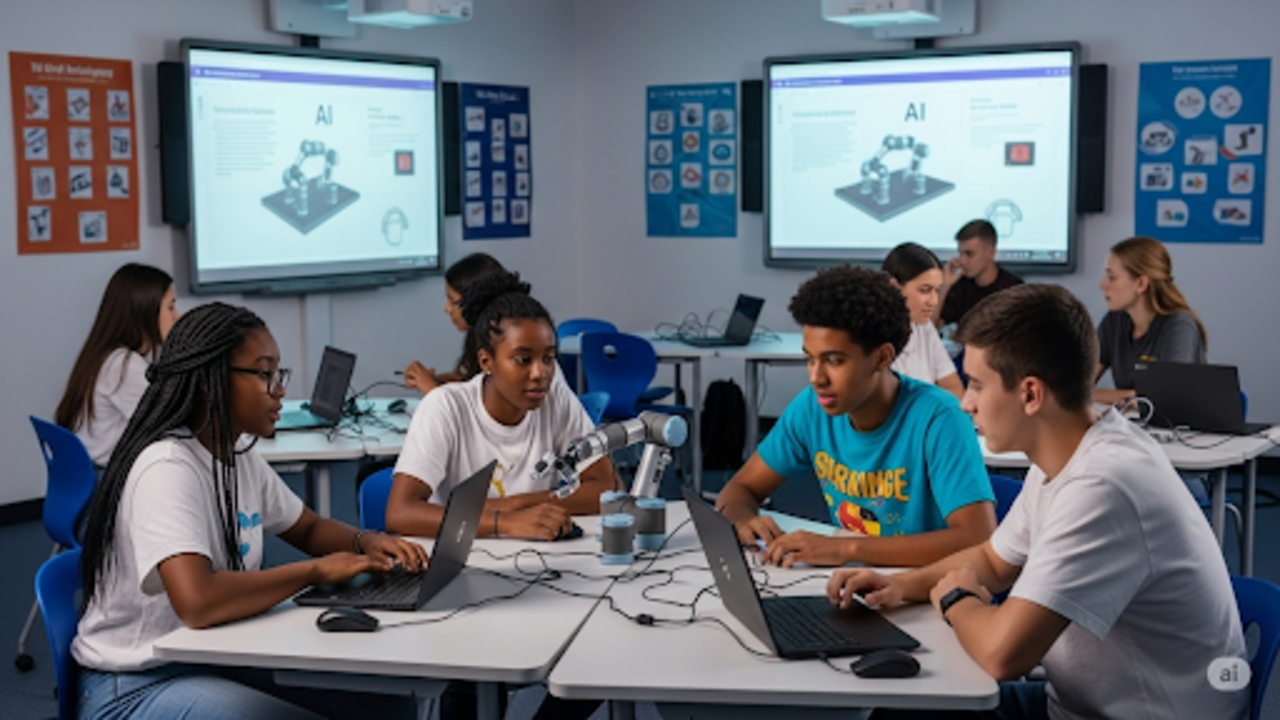
AI tools empower lecturers to monitor progress and refine EMI teaching.
Institutional Support and Policy Integration
For sustainable EMI quality, professional development should align with institutional policy. Universities must embed EMI training into promotion criteria, teaching evaluations, and workload planning. Policies encouraging participation in continuous training, cross-department collaboration, and research on EMI pedagogy ensure that EMI development becomes systemic rather than optional.
Best Practice: Universities in Singapore and Malaysia now link EMI certification programs to lecturer appraisal systems, promoting accountability and institutional excellence.
Pusey, K. (2020). Lessons learned piloting an EMI support course at a southern Brazilian university.
BELT – Brazilian English Language Teaching Journal, 11(2), e39470.
https://doi.org/10.15448/2178-3640.2020.2.39470
Wang, K., Yuan, R., & Costa, P. (2025). A critical review of English medium instruction (EMI) teacher development in higher education: From 2018 to 2022.
Language Teaching, 58(2), 141–172.
https://doi.org/10.1017/s0261444824000351